
Is the Luggage & Bag Industry Facing Shrinking Profits? Discover the Future of Bag Manufacturing at the Shanghai Bag Show!
新闻与活动
浏览我们的所有直播及回放活动,并可通过选择筛选条件来精准检索。
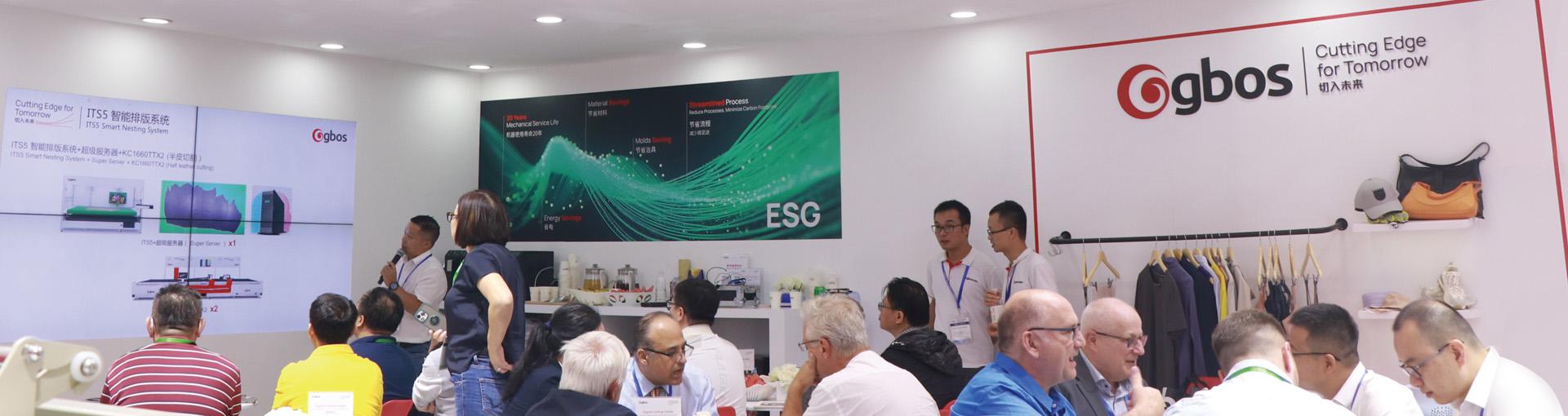
From June 26–28, the 22nd Shanghai International Bags, Luggage & Footwear Expo concluded successfully at the Shanghai New International Expo Centre.
As one of China's most influential trade shows for the luggage and bag industry, the event spotlighted the sector's most pressing challenge: how manufacturers can protect profit margins amid rising material costs, increasingly fragmented orders, and growing labor expenses.


Four Structural Challenges Reshaping the Luggage & Bag Industry
At the core of these profit losses is the growing mismatch between traditional manufacturing methods and today's market demands—a challenge repeatedly raised by visitors throughout the exhibition.
1. Lengthy Sampling Cycles Lead to Missed Market Opportunities
Traditional die-based production requires separate tooling, trimming, and storage, with the entire process often taking several days. As market trends evolve rapidly and demand for small-batch customized orders continues to grow, manufacturers face rising tooling costs and longer lead times—often resulting in missed business opportunities and lost customers.
2. Excessive Leather Material Waste Erodes Profit Margins
The cost of premium leather continues to rise year after year, yet manual nesting still relies heavily on operator experience. As a result, defects, scars, and irregular hide contours cannot be utilized efficiently, causing excessive material waste and turning valuable leather into offcuts. Manufacturers may secure more orders, but shrinking margins leave little room for profit.
3. Heavy Reliance on Manual Labor Limits Productivity and Quality
Key processes such as cutting, positioning, and edge trimming still depend heavily on skilled operators, while labor shortages and rising wages continue to increase production costs. In addition, manual operations are prone to dimensional inconsistencies, resulting in higher defect rates in mass production and costly rework that consumes extra materials and labor hours.
4. Material Compatibility Challenges Slow Sustainable Transformation
Disconnected workflows across pattern design, cutting, and precision processing make production inefficient, while conventional equipment often struggles to process emerging sustainable materials such as recycled leather, composite waterproof fabrics, and foam laminates. As a result, many manufacturers are eager to embrace greener production but lack an integrated processing solution.
These challenges cannot be solved through isolated process improvements alone. Instead, they require a digital transformation of the core cutting process—the foundation of modern manufacturing. This is precisely why the GBOS booth attracted strong interest from manufacturers and industry professionals throughout the exhibition.


Experience the Core Value of Smart Manufacturing Upgrades
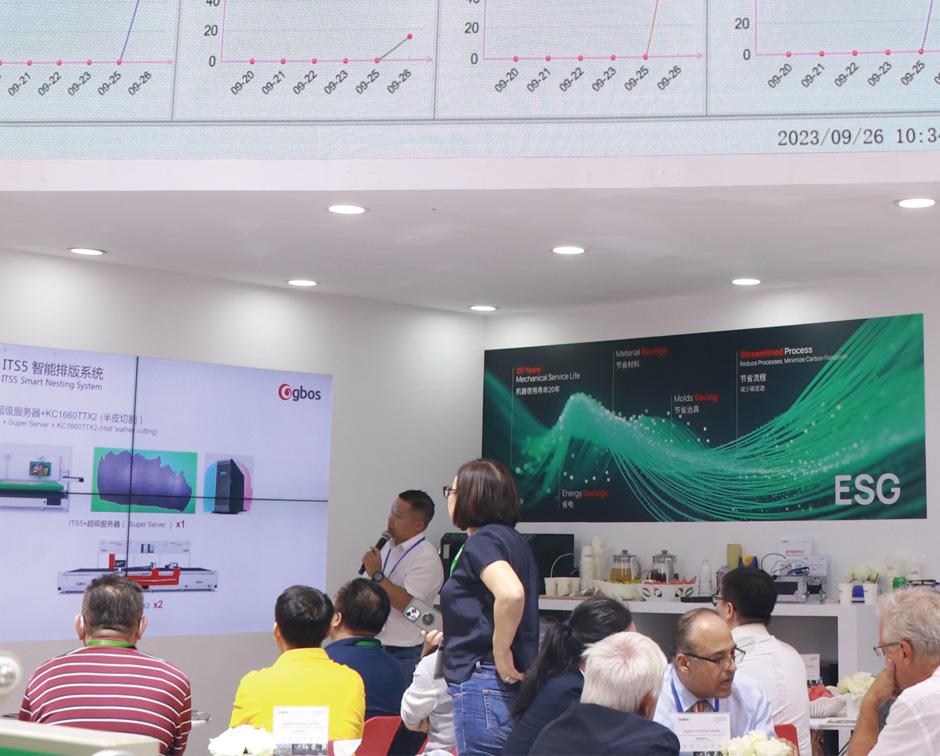
Throughout the exhibition, GBOS presented live production-line demonstrations that replicated real luggage and bag manufacturing scenarios. Visitors were able to witness firsthand the difference between digital manufacturing and traditional production methods, gaining a clear understanding of how intelligent automation drives lower costs, higher efficiency, and more consistent production.
The live demonstrations covered the complete cutting workflow for a wide range of luggage and bag products, including handbags and leather bags, highlighting the real-world performance of GBOS AI-powered intelligent cutting technology.

Visitors could see the AI vision system automatically scan leather hides, accurately identify natural defects, and intelligently optimize nesting layouts to maximize material utilization. By eliminating the inconsistencies of manual nesting and significantly reducing leather waste, the system delivered visible improvements in material savings and production efficiency.
For precision processes such as printed pattern matching, irregular-shaped components, and zipper openings, the system delivered fully automated, high-precision cutting throughout the entire workflow. Each cut piece was clean, consistent, and dimensionally accurate, effectively eliminating the misalignment and quality issues associated with manual operations while significantly reducing rework and material waste.
With no need for die making or die storage, new digital patterns can be imported with a single click for rapid sampling and mass cutting. This enables manufacturers to respond quickly to today's market demand for small-batch production, diverse product styles, and fast design iterations.

Live demonstrations covered a wide range of commonly used materials, including genuine leather, PU, recycled sustainable materials, and EVA. By showcasing their performance across diverse luggage and bag manufacturing applications, visitors could easily compare the solutions with their own production processes and identify the most suitable upgrade path for their specific products and manufacturing requirements.

More than showcasing individual machines, GBOS demonstrated a complete digital manufacturing workflow.
Supported by live demonstrations, the GBOS technical team provided one-on-one consultations to analyze each customer's production challenges. Based on individual order structures, material characteristics, and manufacturing workflows, they evaluated potential savings in materials, labor, and production time—turning digital transformation from an abstract concept into a practical, measurable solution that delivers real productivity gains and higher profitability.
GBOS remains committed to a solution-first, results-driven approach. Beyond providing advanced equipment, we tailor our solutions to each manufacturer's unique production requirements, creating a customized pathway toward digital transformation and intelligent manufacturing.

The Era of Extensive Manufacturing Is Over—Digitalization Is the Way Forward
This year's exhibition delivered a clear message to the industry: the era of relying on low-cost labor and inefficient material consumption for profitability has come to an end.
With rising material costs, increasingly diverse consumer demand, and growing labor expenses, manufacturers that continue to rely on traditional die-based production and manual cutting will face mounting pressure from price competition and shrinking profit margins.

Whether they are leading leather goods manufacturers in China or factories expanding into global markets, more and more companies recognize intelligent cutting as a key step toward manufacturing transformation.
Technological innovation is not about simply reducing the workforce—it is about fundamentally reshaping the manufacturing process. By minimizing material waste, accelerating new product development, ensuring consistent product quality, and reducing reliance on manual labor, intelligent manufacturing creates lasting competitive advantages. Together, these improvements enable manufacturers to move beyond price competition and build a more resilient, differentiated production capability.

GBOS will continue to connect every stage of the luggage and bag manufacturing process, helping manufacturers reduce costs while advancing greener, more sustainable production. Through practical, end-to-end digital solutions, we empower manufacturers with a clear and achievable path to digital transformation—supporting more factories in accelerating their smart manufacturing journey.