
ITMA Insights: How Can Apparel Manufacturers Win High-Value Orders?
News&Events
Discover all our Live or Replay events and refine your search by selecting a filter and criteria.
ITMA Asia is a litmus test for the textile manufacturing industry.
It is more than a showcase for comparing equipment specifications. It offers a closer look at the realities shaping the global textile industry and the challenges manufacturers face today.
Order structures are changing. Customer expectations are evolving. Competition among manufacturers is no longer just about production capacity, but increasingly about flexibility, material waste control, and the ability to respond quickly to market demands.

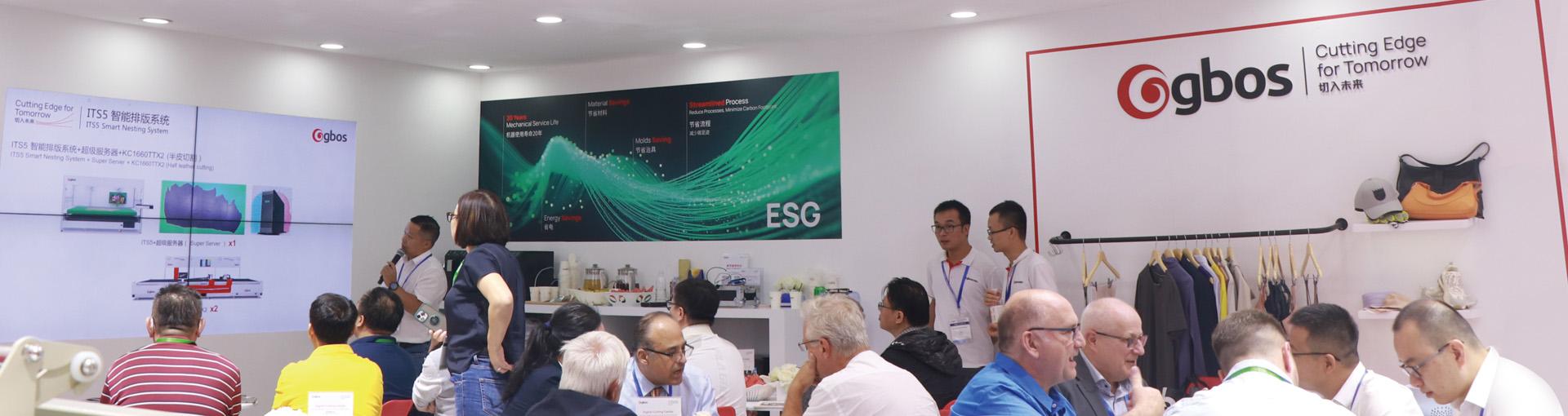
GBOS brought a complete range of cutting solutions, proven in real-world factory applications, to the exhibition. Through face-to-face discussions with industry professionals from around the world, we gained firsthand insights into the changes reshaping the industry.

The Growth Challenges Facing Textile Manufacturers
High-value order opportunities are within reach, yet they lack the production flexibility to take them on.
Small-batch, multi-style production has become the norm. Frequent style changes and machine adjustments consume valuable time and increase operating costs.
It's not that manufacturers are unwilling to upgrade. Rather, they have legitimate concerns.
Retrofitting an entire production line requires significant investment. There are also concerns about whether new technologies will fit their actual production needs and whether the investment will deliver tangible returns.

What the industry truly needs is not cutting-edge technology built around concepts, but practical solutions that can be implemented on the factory floor and adapted to diverse applications, including apparel, accessories, denim, and functional fabrics. Solutions that genuinely help manufacturers reduce material waste and shorten sampling cycles.
Profitability is not simply about scale. It lies in the efficiency gains found in every stage of production.
This is exactly why so many industry professionals come to ITMA: to explore practical ways to overcome these challenges and unlock new growth opportunities.

Technology Built for Real Factory Needs
To address common industry challenges, GBOS presented more than a collection of individual machines at the exhibition. Instead, it introduced an integrated cutting solution designed for multi-category manufacturing.
Covering key applications such as stretch fabrics, labels and accessories, and denim, the solution integrates AI vision recognition, intelligent nesting for material savings, automated continuous operation, and production data management.
It handles both high-volume roll material production and flexible sampling for irregular shapes and complex patterns. By reducing reliance on physical dies, it also helps manufacturers lower changeover and machine adjustment costs while improving production flexibility.


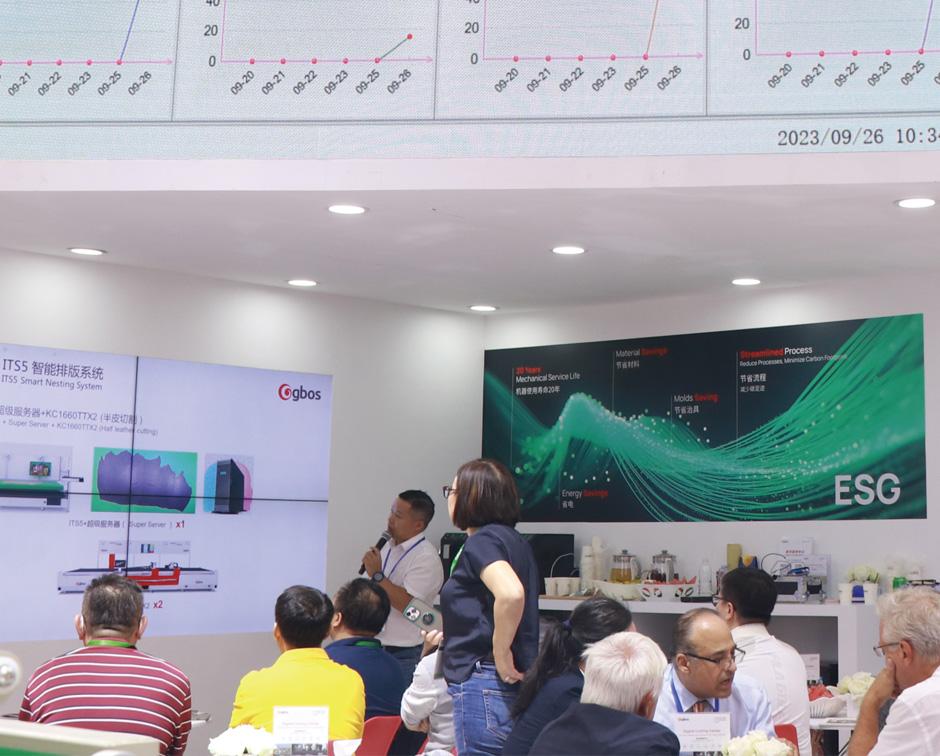
The steady flow of visitors at the GBOS booth offered direct feedback from the market.
Many visitors stopped to watch live sampling demonstrations, bringing their own factory materials and design drawings to work with the GBOS team. Together, they evaluated cutting processes, assessed material consumption, and discussed production timelines.


Many overseas distributors and factory representatives held in-depth discussions with the GBOS team, reached cooperation agreements, and some even confirmed orders on the spot.
For them, seeing the cutting processes in action and understanding the measurable returns speak far louder than promotional claims.

Making the Right Moves in Manufacturing Upgrades
The high level of engagement and in-depth discussions at ITMA sent a clear message: the textile industry's next phase of transformation is about practical value, not empty concepts. Manufacturers are placing greater emphasis on certainty and measurable results.
When evaluating new equipment, overseas buyers and domestic manufacturers are primarily looking at three key factors:
-
Application Flexibility: Can the solution accommodate their existing production needs, including mixed-material manufacturing?
-
Cost Control: Can it effectively reduce raw material waste and labor costs?
-
Reliable Technical Support: Will they receive consistent, dependable technical service and support after delivery?

The future of textile manufacturing will be defined by who can respond faster to changing market demands, minimize material waste, and consistently deliver a diverse range of products.
An exhibition provides a platform for exchange, but the real test always takes place on factory floors around the world.
GBOS will continue to follow up with the customers and partners we connected with at ITMA, providing hands-on support throughout implementation. Our goal is to turn the insights and agreements reached at the exhibition into tangible improvements in factory efficiency and production performance.

Professional Digital Cutting Solutions
Smart Layout Planning | Sample Testing | ROI Analysis | Technical Support | Training | Custom Solutions | Parts